
Stevenage, a Hertfordshire town 30-odd miles out from London, is crumbling under the weight of its symbolism. Literally. The leader of the council says it was about 15 years ago when all the Fifties concrete here passed its best-before date. As Britain’s first New Town, slotting Blitz-dizzy Londoners into its grid of council terraces and pedestrianised plazas from 1951, this was ground zero for the utopian ideals of a postwar nation.
Now, its concrete looks a little soggy and sad. The classic layout of the original estates, with houses facing out into green spaces and quiet walkways, and cars hidden behind the backdoors, has meant many residents simply stopped using their front doors and mowing their front lawns. A place designed to provide everything you need in life within walking or cycling distance (it’s home to Britain’s first bike lanes) now functions largely as a commuter town.
The New Town’s assets were flogged along with everything else in the Thatcher-day firesale, and since then it’s been stuck in a suspended dream of revival: decades of will-they-won’t-they regeneration plans, scuppered by financial crashes, government cuts, and planning snarl-ups. A new leisure centre is finally replacing the old concrete original; the town centre is next on the list.
Exposed both to London’s boom and industrial England’s bust in the Eighties, the town is now slightly better-off than your average, and has a strong defence heritage: BAE Systems-owned MBDA produces the Storm Shadow cruise missiles used by Ukraine. Airbus Defence and Space is here, too: a quarter of satellites in space, I’m told, are made in Stevenage. Why reach for a new leisure centre, when we have the stars?

Back on earth, though, Stevenage has become a new kind of symbol – that of the archetypal English swing voter. The parliamentary constituency is a bellwether, a classic Labour-Tory marginal that has always voted for the winning party of government. Standing on the impossibly broad shoulders of Basildon Man and Worcester Woman, ahead of the 2024 general election, rose “Stevenage Woman” – the voter Keir Starmer had to win.
She is a mum in her early 40s, bringing up two kids, working hard, and worrying about her mortgage and bills going up, according to Labour Together, the think tank that christened her. She is apolitical, a tad social conservative and a tad state interventionist, may have skipped voting in some elections and likely voted for Boris Johnson’s Conservatives in 2019. Voters like her made up the largest group in 430 of the 573 constituencies in England and Wales in 2024.
The women of Stevenage apparently became fed up with reporters turning up to ask how they would vote at the time – “‘Stevenage Woman’ isn’t a phrase I’d use,” Kevin Bonavia, the Labour MP here, warns. But almost instantly I meet her in the pedestrianised shopping precinct, her 18-month-old daughter straining at her reins to reach the water in the New Town Fountain; an oblong pool giving rise to a minimalist clockface on concrete stilts.
“I don’t really follow politics, I’m too busy with this one,” she gestures at her toddler, who is vigorously waving at me. “The country needs a bit of a refresh, but I don’t think a lot’s going to change; they’re [political parties] all the same.”
She has voted both Tory and Labour and abstained in the past, and is disappointed by the current government – “I don’t think anyone likes the Prime Minister now, do they?” she laughs – and is worried about her bills, though hasn’t hit the breadline. “I’m not going to blame the government for prices going up; it’s better to just get on with it and not be a victim, isn’t it?”
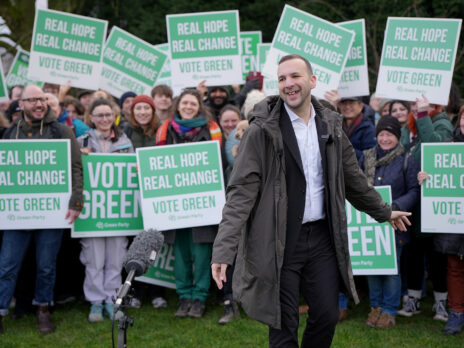
She’s trying to decide whether to vote Green or Reform in the local elections, taking place to elect 14 councillors to Stevenage Borough Council on 7 May. “I’d really like one of the smaller parties to have a chance to do something new.”
This is not an unusual response in Stevenage. One Green council candidate there tells me a significant number of voters have been telling her they want to vote Green but are also tempted by Reform’s immigration policies.
“They say they like what we’re saying about taxing the super-rich, the nature elements, and being left-wing, but they’re undecided because of immigration,” says Becca Watts, a chef working three zero-hours jobs and raising her nine-year-old son solo, hoping to win for the Greens in Almond Hill. “There’s a lot of people who don’t like Zack [Polanski] – that article about doing some research on breasts and stuff often pops up quite a lot, or that he’s too woke. But there’s a lot of other people realising through him that the Green Party isn’t just about the environment, it’s about equality, ethics, diversity.”
A small but significant chunk of voters are “shopping around” like this, according to Gideon Skinner, head of politics at Ipsos in the UK, who shared his exclusive findings with the New Statesman. Overall, around three in 10 Britons are considering voting for each of the parties at the moment, with the proportion considering both Greens and Reform at about 7 per cent.
Councillors here seem to have developed a taste for shopping around too. Mason Humberstone, a 26-year-old elected three years ago and considered Labour’s “rising star”, according to a council source, defected from Labour to Reform last year, accusing Labour of being “lost, without vision”. Then, in turn, a Reform councillor at the county level quit earlier this year to join the far-right Restore.
Stevenage Borough Council has always been Labour, but a “mega-poll” of 5,000 voters by JL Partners found in January that Reform here came out on top at 23 per cent, versus Labour on 21 per cent and the Conservatives on 19 per cent.
Whatever happens, Labour is set to lose most of the seats up at these elections, with one councillor admitting that holding four (out of 11) would be a “good win”. If Reform wins them all, it will deprive Labour of control of the council for the first time. When the vote was briefly cancelled in Stevenage – before the Labour government u-turned on postponing some council elections – Nigel Farage claimed “the establishment is cancelling local elections in Stevenage because they know Reform would win them”.
Then came the news that Conor Mcgrath, a Labour councillor and former aide to the local MP, resigned having been charged with possessing indecent images of children. This doesn’t come up on the doorstep, I’m told, but there’s all sorts on social media. Amid the scandal of Peter Mandelson’s appointment to US ambassador – as a friend of Jeffrey Epstein – and No 10 trying to anoint Matthew Doyle as a diplomat, despite him having campaigned for a candidate then accused (now convicted) of paedophilia, it doesn’t help.
A group of Labour canvassers meet at the edge of one of the original New Town housing estates in the St Nicholas (“St Nicks”) neighbourhood: a green and walkable maze of town planning that considered everyone but the postman. St Nicks is deprived but diverse, home to eastern European and Asian families who have moved here: it isn’t a given that Reform will gain both Labour’s seats here. In the Labour team’s pep talk, Reform doesn’t even get a mention – it’s all about the Greens (“remember, only Labour can deliver; the Greens can’t win here” and “the Greens want to pull out of Nato!”).
The main message, though, is to tell voters that £20m of funding is coming to St Nicks: part of the government’s £5bn bet to beat Reform with the Pride in Place programme, a supposedly folksier and fairer version of the Tories’ Levelling Up fund. This is a poor part of town, populated by many who work in retail or on the nearby industrial estate.
As we wind along tight terraces and up and down low-rise blocks of flats, I hear more “don’t knows” than people sticking with Labour. Still, it counts as a good morning because no one they’ve previously knocked has said they’ve changed their mind and will vote Reform or Green. The Labour MP Kevin Bonavia, who joins the door-knocking trip, says voters have become more positive about Labour since the Iran War broke out.
“There’s been a bit of a change in tone recently on national issues,” he says. “People are worried about it” and are reassured that “we’ve got a Prime Minister who said we’re staying out of that war, but not just that, is staying cool and calm”. (I don’t hear this myself, but campaigners for other parties tell me they noticed this too, though the Mandelson scandal has since been deadening any kind of bounce).
“It’s been tough, I’m not going to lie,” says Claire Parris, a Labour councillor for St Nicholas who lived on the estate for 30 years. “People say ‘I don’t like Starmer’ but it’s just how the press portray him, and it’s a lot to be expected to overturn 14 years in 18 months… Some might go from Labour to Reform,” she admits. “We’ve got to fight that.”
Over in Manor, a more affluent patch of mews with names like Augustus and Minerva, two-car drives and private electric charging points, the Lib Dems are doing the teatime rounds. They are likely to be replaced as the opposition party on the council by Reform.
While there are “surprisingly few Labour and Conservative voters around these days, and the Lib Dems have been the beneficiaries”, as Steve Jarvis, the Lib Dem leader of Hertfordshire County Council, says, “the political situation being a lot less stable, with five or six candidates at least in each ward, makes it much more difficult to forecast who’s going to win”.
The leader of the Lib Dems in Stevenage, Andy McGuinness, says that defining themselves against “Trumpian, post-truth populism” works in their favour, but the main playbook is keeping things local: drop kerbs, streetlights, what one of the other candidates calls, gravely, “inappropriate bushes”. “Very spiky things, unsightly things,” he says, to nods.
There is enthusiastic support for the Lib Dems here – “I always vote for you in the locals, because you get things done!” – and some enthusiastic opposition. “Why are you smiling?” asks an angry resident when poor, polite Andy turns up at his door. “Don’t stand there and smile, gas is going up, this country’s going down the pan and the Lib Dems are anti-UK, you wanted to rejoin the EU!”
Another woman, who says she is from a “strong, Labour-voting family” wouldn’t vote Labour again because, as a pensioner, she still has to work seven days a week in her job at the hospital to survive. “And there are people living on benefits, bringing home far more money, going on two to three holidays a year.” She tells the canvasser she hasn’t made up her mind.
This was a common pattern: the “shy Reform” voter. “All I know is I won’t be voting Labour”; “I’ll keep that to myself”; “I won’t be discussing that, thank you”; “No, thank you”. For the canvassers I’m with, this means “I’m too embarrassed to say I’ll be voting Reform”. I find I have to winkle this out of people in Stevenage, particularly in smarter places like Manor.
And they aren’t the only shy ones. Despite trying everyone, no Reform councillors or candidates will speak to me in Stevenage. Someone on the local Reform campaign tells me, “the candidates can’t speak to journalists”. How come? “They’re not media trained yet, they don’t have the experience, and they might say the wrong thing, or something that’s not our policy, or they might not know what to say, and then it becomes a story”. Racist and offensive comments by Reform candidates have been landing the party in difficulty as the local election campaigns intensify across the country.
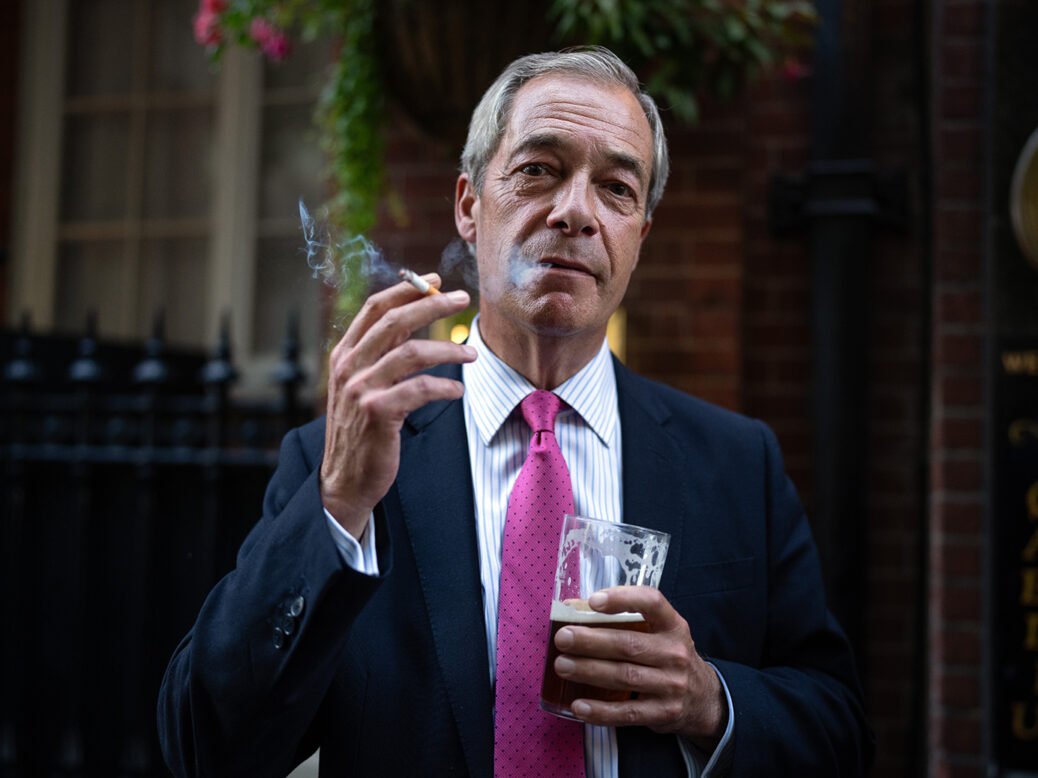
Stevenage Woman may not be quite ready for Nigel Farage, but she is thinking about it. What is clear is that in this Labour-Tory bellwether of England, no one really wants either anymore.
Content from our partners

Related

Join the debate
Subscribe here to comment